
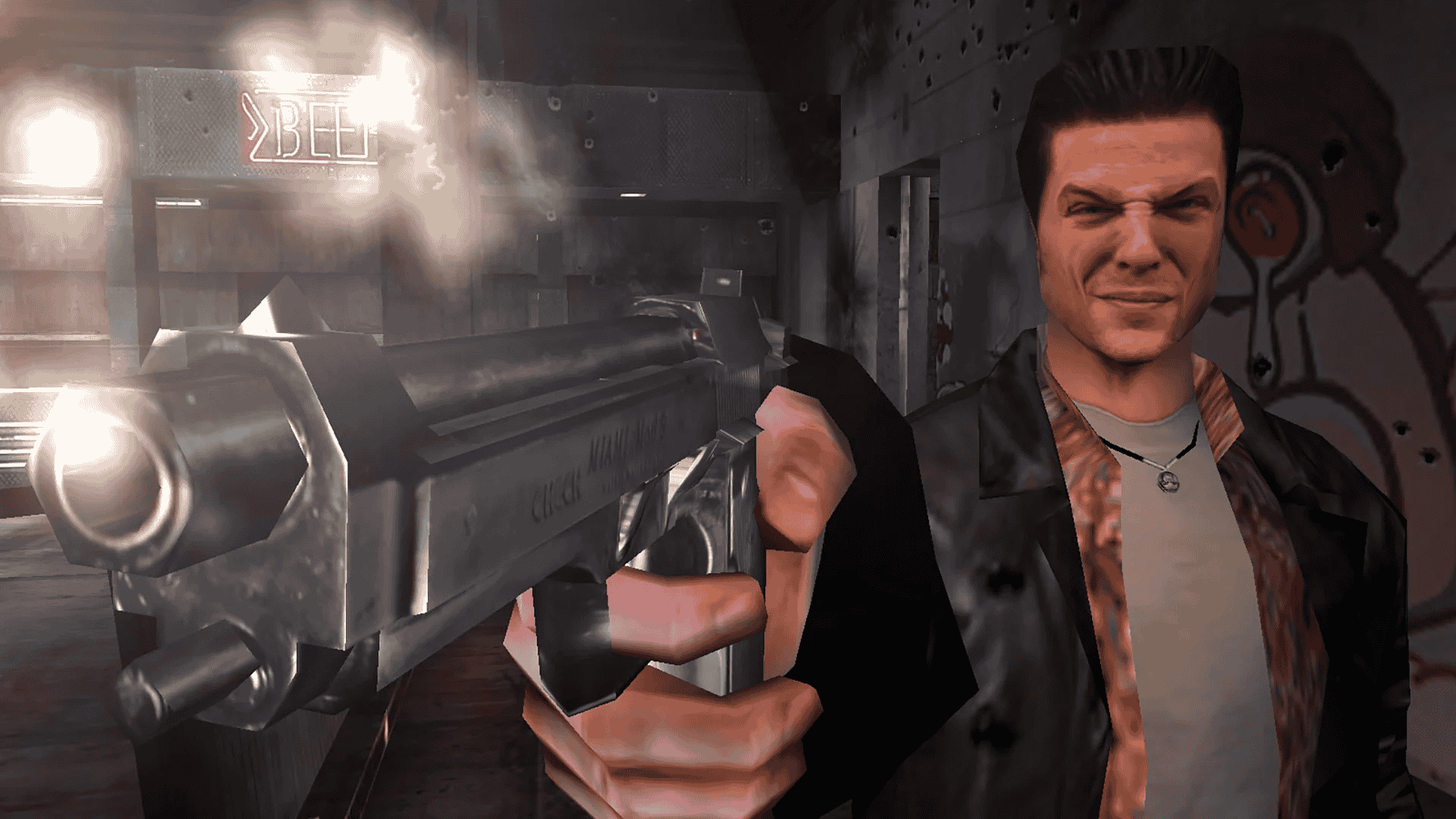
Released in 2001, Max Payne remains one of the most influential narrative-driven games ever made. Its combination of gritty storytelling, noir-style narration, and cinematic gunfights changed the landscape of story-based action games forever.
Let’s revisit the complete story of Max Payne 1 — a dark tale of loss, revenge, and redemption that still echoes through the industry more than two decades later.
The Dark Beginning: How the Story of Max Payne 1 Starts

The story begins in a freezing New York winter. Max Payne, a dedicated DEA officer, lives a peaceful life with his wife Michelle and baby daughter Rose. He’s the perfect cop — honest, disciplined, and driven by a deep hatred for crime.
That peace shatters one tragic night. Max returns home to find the door broken, the house eerily silent except for the cries of his child. As he climbs the stairs, horror awaits — his wife and daughter have been brutally murdered by addicts high on a new synthetic drug called Valkyr, a secret military experiment designed to create super soldiers.
In that moment, Max’s life collapses. The law he once served becomes meaningless. Driven by grief and vengeance, he turns from cop to fugitive, hunting those responsible in a city rotting from within — a place ruled by mafias, corrupt corporations, and lies.
A Journey Through Revenge and Betrayal

Framed for a murder he didn’t commit, Max infiltrates the underworld to uncover the truth. The police are after him now, leaving him isolated and hunted. He becomes a man living between worlds — neither hero nor villain, but something in between.
During his investigation, Max meets Mona Sax, a contract killer with a mysterious aura and a tragic past. Their connection is built on understanding rather than trust, both of them haunted by loss and deception.
As the conspiracy unfolds, Max discovers that the real culprit behind his family’s death is AEC Corporation, a powerful pharmaceutical company secretly developing Valkyr under a classified military program known as Project Valhalla.
The story blends science fiction and human emotion in remarkable ways. Max isn’t just fighting criminals — he’s battling guilt, nightmares, and the ghosts of his past. Some chapters take place inside hallucinations and dream sequences where he walks over trails of blood and hears his daughter’s cries, symbolizing his fractured psyche.
Everything is told through Max’s internal monologue, delivered in that deep, weary tone that made the game feel like a playable noir novel — cold, poetic, and painfully personal.
The Ending of Max Payne 1 Explained
In the final act, Max confronts Nicole Horne, CEO of AEC and the mastermind behind the Valkyr project. After an explosive showdown filled with bullet-time gunfights — the slow-motion mechanic that became the game’s signature — Max kills her by blowing up the top of her skyscraper.
Yet the ending isn’t about victory. It’s about emptiness. Even after exacting revenge, Max finds no peace — only silence. When the police finally arrive to arrest him, he smiles faintly, as if he’s accepted his fate. Justice and punishment have merged into one.
This haunting finale underscores the game’s central theme: revenge doesn’t heal pain — it only exposes the void beneath it. Max Payne isn’t about triumph, but about confronting darkness — both in the world and within oneself.
Why Max Payne’s Story Still Matters Today

Even more than 20 years later, the story of Max Payne 1 stands among the most emotionally resonant in gaming history. It isn’t just an action thriller — it’s a reflection on grief, guilt, and the human need for meaning after loss.
The blend of comic-book panels, melancholic soundtrack, and film-noir narration created a tone unlike anything else at the time. It felt like living inside a tragic graphic novel where every bullet carried the weight of memory.
Its legacy lives on through later titles like Alan Wake and Control — both created by developer Remedy Entertainment — and in countless modern games and films that adopted the archetype of the “broken hero” fighting against an unforgiving world.
Don’t forget to check: