
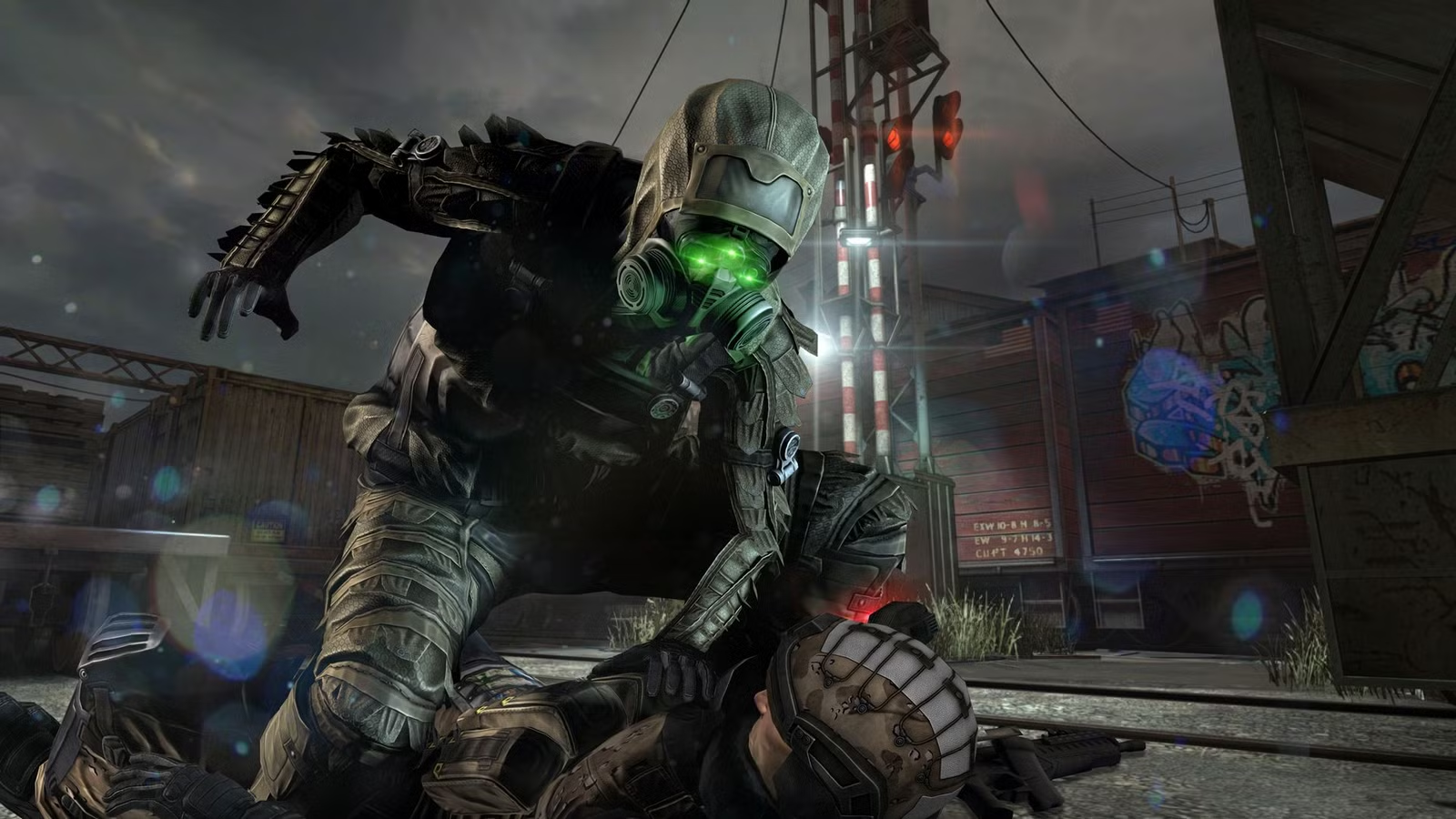
The world of stealth and espionage in video games has always had a unique allure, and Splinter Cell remains one of the most iconic franchises in this genre, thanks to its legendary protagonist Sam Fisher. If you are interested in the events of the game and how it all started, we aim in this article to have Splinter Cell story explained briefly without missing any important details.
Introduction to Splinter Cell
The Splinter Cell franchise launched as Ubisoft’s direct rival to stealth greats like Metal Gear Solid, but it quickly carved out its own identity with realism and advanced stealth technology.
The story centers on Sam Fisher, an operative of the NSA working under a top-secret division called Third Echelon. Across multiple entries, the series tackles global terrorism, geopolitical conflicts, and the risks of advanced technology—all while balancing personal struggles that put Sam face-to-face with hidden forces threatening world security.
Splinter Cell Story Explained in Brief

In short, Splinter Cell follows Sam Fisher’s life dedicated to his country through covert operations demanding elite espionage skills. Over the years, Sam takes on terrorist groups, rogue governments, and global criminal networks.
The series begins with nuclear threats in Eastern Europe, escalating into international terrorism and even conspiracies within the U.S. government itself. At its core lies Sam’s constant struggle to serve his duty while protecting his personal life, especially his daughter, Sarah Fisher.
Splinter Cell (2002): The Beginning
The first entry introduces Sam Fisher as he joins Third Echelon to stop a Georgian government led by Kombayn Nikoladze from sparking nuclear war.
Sam uncovers a plot to deploy nuclear weapons and conducts stealth operations in military bases and nuclear plants. This debut established the core gameplay pillars: staying in the shadows, using gadgets, and silent takedowns.
Splinter Cell: Pandora Tomorrow (2004)
Sam faces an Indonesian terrorist group led by Suhadi Sadono, who threatens to unleash a deadly virus known as ND133. Missions span East Timor, Paris, and Washington, as Sam races to stop a global outbreak.
The narrative blends fictional espionage with real-world political tensions, highlighting the franchise’s signature style.
Splinter Cell: Chaos Theory (2005)
Widely regarded as the series’ peak, Chaos Theory follows a conspiracy involving North Korea and Japan, where Sam must prevent cyberattacks that could ignite World War III.
The game emphasized player freedom—stealth or direct combat—while delivering a complex story of intelligence networks. Sam’s humanity is more exposed here, balancing his duty with personal emotions.
Splinter Cell: Double Agent (2006)
Taking a darker turn, Double Agent has Sam infiltrate a terrorist cell led by Emile Dufraisne as a double agent, following the supposed death of his daughter.
Sam faces an internal struggle: maintain his cover or lose himself in the criminal world. Player choices directly affect the story and endings, offering one of the franchise’s most morally complex experiences.
Splinter Cell: Conviction (2010)
Years later, Sam becomes a fugitive hunted by his own government. He discovers his daughter’s death was not accidental but part of a larger conspiracy, driving him into a personal vendetta.
Gameplay shifts toward faster, more aggressive action, reflecting Sam’s unstable mindset. This installment portrays him as a more violent, desperate anti-hero.
Splinter Cell: Blacklist (2013)
Blacklist revives Sam as the leader of a new Fourth Echelon team, tasked with stopping a terrorist organization known as The Engineers, who launch coordinated attacks on the U.S. called “The Blacklist.”
The story combines teamwork, leadership, and high stakes, while still grounding Sam in his personal role as a father. It’s one of the series’ most mature and technically advanced entries.
The Future of Splinter Cell

Since Blacklist in 2013, no major sequel has been released. However, Ubisoft has confirmed a remake of the original Splinter Cell using the Snowdrop engine, promising a reimagined story with modern visuals and audio.
Sam Fisher has also appeared in crossover events in games like Ghost Recon and Rainbow Six, showing Ubisoft’s intent to keep the character alive in its future plans.
Don’t forget to check: