Soulslike games are among the most influential genres in the video game industry. Through titles such as Dark Souls, Bloodborne, and Elden Ring, FromSoftware established new standards for challenge, bleak world-building, and environmental storytelling—where the narrative is conveyed through atmosphere and experience rather than direct exposition. This approach reshaped the relationship between player and game, making suffering, gradual learning, and failure a natural part of progression.
Within this heavy legacy, Code Vein II, developed by Bandai Namco, arrives as an attempt to offer a different interpretation of the genre. From the start, the series chose to blend Soulslike fundamentals with a strong anime aesthetic, more explicit storytelling, and companion characters who share the journey—contrasting with the isolation that defines many FromSoftware titles.
So, does Code Vein II succeed in establishing a distinct identity within an overcrowded genre? How effective is its mix of demanding combat and direct narrative? And does this sequel represent a meaningful step forward, or does it remain trapped in constant comparison with Soulslike giants? Let’s break it all down in this Code Vein II review.
A Story Built Around Time Travel

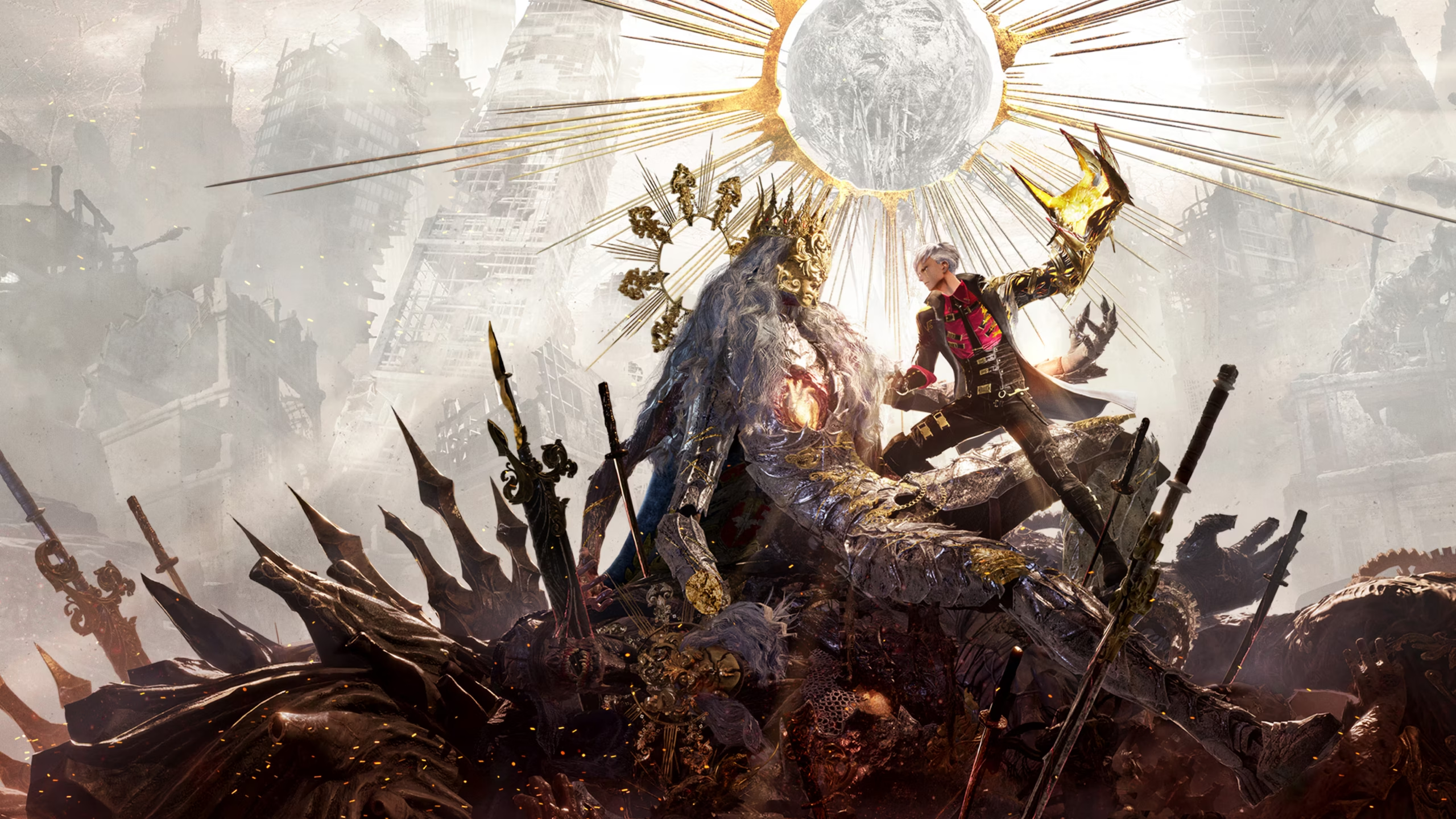
Code Vein II takes place in a world on the brink of collapse, where humans and Revenants coexist amid widespread destruction caused by an unresolved ancient conflict. You play as a Revenant Hunter resurrected into a catastrophe far greater than the fall of a civilization—one tied to five legendary heroes from the past, known as the Heroes, whose very existence has become a threat to the world’s future.
The core narrative revolves around time travel. To confront the devastation of the present, the game grants you the ability to return to the past—revisiting key periods that shaped the fate of those heroes and the world itself. Your actions in the past directly influence the present, affecting environments, characters, and even the direction of the story.
Rather than unfolding in a strictly linear fashion, the story is presented as a web of intertwined events across past and present. Sometimes you feel as though you are correcting mistakes; at other times, you realize certain tragedies were inevitable no matter what you changed. This manipulation of time adds a more personal tone to the narrative and gives your decisions weight—even when their consequences are more symbolic than transformative.
Fast-Paced Combat With a Softer Soulslike Edge

Code Vein II’s gameplay emphasizes aggression over prolonged caution. The game encourages initiating combat and staying on the offensive rather than waiting endlessly for openings. Encounters are clearly geared toward close-quarters combat, pushing you to remain in the heart of the fight instead of retreating or playing overly defensively.
Quick attacks form the backbone of most encounters and are often enough to handle standard enemies—and even some tougher ones. Heavy attacks and special abilities exist, but they are not always essential, serving more as situational tools than core mechanics. This makes combat accessible and easy to pick up, though it can sometimes reduce the tension that defines harsher Soulslike battles.
A central pillar of the experience is the Blood Codes system, which defines your character’s abilities and playstyle without locking you into permanent stat allocations. You can freely switch between different builds, weapons, and abilities without fear of making irreversible mistakes or needing a full respec. This flexibility is one of the game’s strongest features.
Special abilities tied to the Ichor resource add variety through ranged attacks and temporary buffs. While these skills provide clear advantages, they are not always mandatory, as many encounters can be cleared through basic melee combat alone—occasionally reducing the need for careful planning.
Boss fights are the most inconsistent aspect of gameplay. Some bosses offer satisfying encounters that reward reading patterns and precise reactions, while others feel simplistic or recycled from previous enemies. This unevenness affects the sense of escalating difficulty typically associated with Soulslike games.
Exploration is split between an open world that connects regions and more confined, dungeon-like areas. The open world functions mainly as a hub for progression and resources but rarely surprises with meaningful discoveries. Dungeons are more focused, yet suffer from repetitive enemy placement and encounters, causing certain sections to overstay their welcome.
Companion characters play a major role in shaping the experience. Partners can distract enemies, provide direct support, or even revive you after defeat, significantly softening the punishment. You can also temporarily fuse with your partner to gain buffs at the cost of fighting solo for a time—adding variety without fundamentally changing combat dynamics.
Compared to FromSoftware’s Souls titles, Code Vein II delivers a more forgiving and fluid experience. It prioritizes accessibility and continuity over harsh punishment and strict discipline. While FromSoftware games demand precision and respect for every encounter, Code Vein II offers more room for experimentation—even if that comes at the expense of the genre’s signature severity.
Visuals That Serve the World—With Limitations
Visually, Code Vein II maintains the anime-inspired aesthetic the series is known for, paired with dark color palettes that reinforce the sense of a collapsing world. Environmental design occasionally shines, particularly when contrasting the same location across different timelines. Some areas leave a strong first impression, especially those blending ruin with fantasy elements.
However, visual quality is inconsistent. Certain environments appear flat or overly similar, diminishing the sense of variety over long play sessions. Main characters are well-designed and expressive, fitting the anime style, but regular enemies and dungeon spaces suffer from repetition in both appearance and atmosphere. As a result, the visuals support the game’s identity but rarely stand out as a driving force for exploration.
Code Vein II Review Final Verdict
Code Vein II presents ambitious ideas and clear expansion over its predecessor, especially in terms of open-world structure and character customization. Combat is fast and flexible, and the time-travel mechanic adds an intriguing narrative layer in select moments. However, the experience is held back by uneven execution—ranging from combat balance issues to repetitive enemies and dungeons, as well as inconsistent emotional impact in the story.
The game has a distinct identity within the Soulslike genre, but it doesn’t always capitalize on its full potential. Fans of the series and anime-styled action RPGs will likely find plenty to enjoy, while others may feel the ambition exceeded the final level of polish.
Don’t forget to check:
Did you like our Code Vein II review? Let us know in the comments!
Code Vein II Review
Code Vein II has a distinct identity within the Soulslike genre, but it doesn’t always capitalize on its full potential. Fans of the series and anime-styled action RPGs will likely find plenty to enjoy, while others may feel the ambition exceeded the final level of polish.
7.5
Pros
- The Blood Codes system offers great freedom to experiment with different playstyles without penalties or respec costs.
- A robust character creator with extensive options for weapons and abilities strengthens player attachment.
- Ichor-based abilities add a tactical layer that breaks up traditional combat flow.
- Some boss fights are visually striking, musically strong, and genuinely rewarding.
- Character-focused side content delivers emotional stories that sometimes surpass the main narrative.
Cons
- A large open world that feels visually repetitive and fails to adequately reward exploration.
- Limited enemy variety leads to repetitive encounters over time.
- Inconsistent boss quality, with some encounters undermined by camera issues or questionable design.
- Uneven storytelling—strong concepts but occasionally weak presentation and emotional impact.
- Side characters vary greatly in depth and quality.
- Despite its flexibility, the combat system can lack depth, allowing reliance on a single effective strategy for too long.