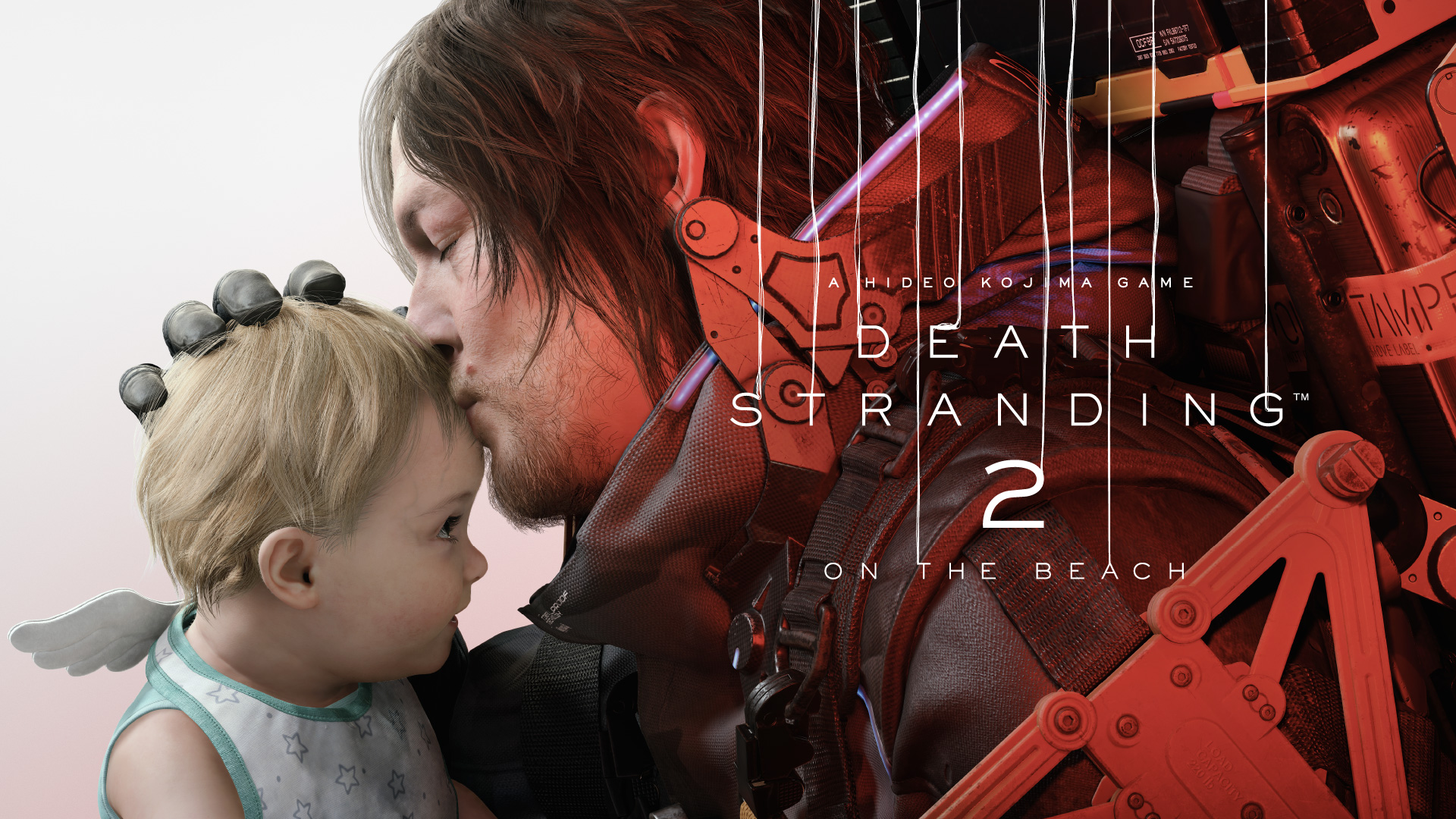
When Death Stranding was first released in 2019, the audience was split into two camps—those who embraced the game’s world and its unique “delivery” gameplay experience, and those who rejected it entirely. Despite this division, the game achieved notable success, cultivating its dedicated fan base. Now, after five years, Death Stranding 2: On the Beach finally arrives. Has Kojima aimed to attract a new audience, or is he content with catering to existing fans by delivering a similar yet enhanced experience? Let’s explore this together in our Death Stranding 2 review.
Deep Story and Shocking Events

After Sam successfully connected North America and defeated the Death Stranding phenomenon and Higgs with help from allies like Fragile and Deadman, he chose to live quietly with “Lou” or “Louise” (the BB he carried in the capsule in the first game). This peace lasts for 11 months.
The second game begins when Fragile finds Sam in hiding and requests his help at Drawbridge company to connect continents from Mexico to Australia. Peace is abruptly disrupted, and a series of events rapidly unfold. What initially appears to be a straightforward delivery mission to reconnect various parts of Australia quickly reveals a much deeper narrative.
Yes, the main objective remains connecting regions to the chiral network to combat BTs (Beached Things) and reestablish human communication. However, the journey is richly layered with comedic, dramatic, and poignant moments, alongside shocking events that drive you forward. The game also delves deeper into the backstories of key characters, deepening your emotional attachment.
Throughout these varied and surprising moments, Death Stranding 2 addresses numerous lingering questions about Lou, the Death Stranding phenomenon, BTs, Sam’s past, and the enigmatic Neal who appeared in promotional material.
New characters introduced through Fragile’s crew each bring distinctive charm and abilities essential to the storyline, complemented by convincing performances, both vocal and motion-captured. However, the protagonist, Sam, sometimes appears subdued compared to others, reacting minimally or staying silent in significant moments—echoing his portrayal in the first game. Still, Norman Reedus delivers a memorable performance, solidifying Sam as an iconic character in gaming.
Refined Gameplay with New Elements

While Death Stranding 2 retains its core delivery mechanic, connecting areas via the chiral network (now in Australia), the sequel significantly enriches gameplay. Missions remain categorized as main (story-driven) or side quests, ranging from transporting cargo to retrieving lost shipments or even rescuing people from hostile areas.
Unlike the first installment, which offered limited gear initially, Death Stranding 2 generously provides tools, weapons, equipment, and vehicles early on. Players can extensively customize vehicles by adding weaponry, batteries, and modifications, enhancing both functionality and enjoyment.
Sam’s clothing is customizable, with attire adapted to environments aiding stealth or evasion of BTs. Various hats, glasses, and masks further enhance gameplay, earned as mission rewards.
The charming “Dolman” companion significantly enriches the experience through humorous interactions, valuable insights, and tactical support, reminiscent of “Mímir” from God of War.
The arsenal has expanded, featuring both returning gear like the binding gun and hematic grenades and new weapons including machine guns, sniper rifles, and grenade launchers. Enemy AI is notably improved, providing a realistic challenge, especially at higher difficulty levels.
Combat scenarios have increased threefold, with more enemy encampments compelling tactical stealth or direct confrontation, supported by numerous new stealth mechanics and equipment.
Boss battles are exceptional, cinematic, and inventive, offering distinct combat mechanics and unforgettable moments, including one of the greatest final battles in gaming history.
Significant additions such as a player-built monorail system streamline large-scale deliveries, and innovative equipment like a coffin-shaped sled enhance mobility and stealth.
The new DHV Magallen ship serves as a central hub for rest, mission planning, combat training, and virtual reality weapon testing. Its fast-travel feature simplifies navigation without sacrificing equipment, although exploring the vast, stunning world on foot remains rewarding.
Dynamic, Ever-Changing World

The world of Death Stranding 2 can simply be described as visually stunning. Its landscapes vary dramatically from vast deserts and snowy mountains to lush forests, rivers, valleys, and beaches.
Environmental dynamics intensify gameplay through sandstorms, blizzards, earthquakes, floods, wildfires, avalanches, and intense rainstorms, creating realistic challenges and enhancing immersion.
Despite some repetitive missions aimed primarily at extending gameplay hours, the new mechanics and dynamic world keep every delivery engaging and story-worthy.
Exceptional Graphics and Technical Excellence

Death Stranding 2 showcases breathtaking graphics and exceptional realism from the first moments of gameplay. Detailed, realistic character models and environments enhance immersion, powered by the impressive Decima Engine, proven through Horizon Forbidden West.
Technically flawless, the game runs smoothly on PS5, offering a polished experience with negligible load times. It utilizes DualSense controller features (Haptic Feedback and Adaptive Triggers) to deepen immersion, vividly simulating environmental effects, collisions, and combat.
Death Stranding 2 Review Final Verdict
Death Stranding 2: On the Beach solidifies Kojima’s legacy with one of gaming’s finest entries, delivering an unforgettable narrative, profound gameplay enhancements, a dynamic and visually spectacular world, and unmatched technical polish. Despite minor shortcomings, it stands as a strong Game of the Year contender.
Don’t forget to check:
