
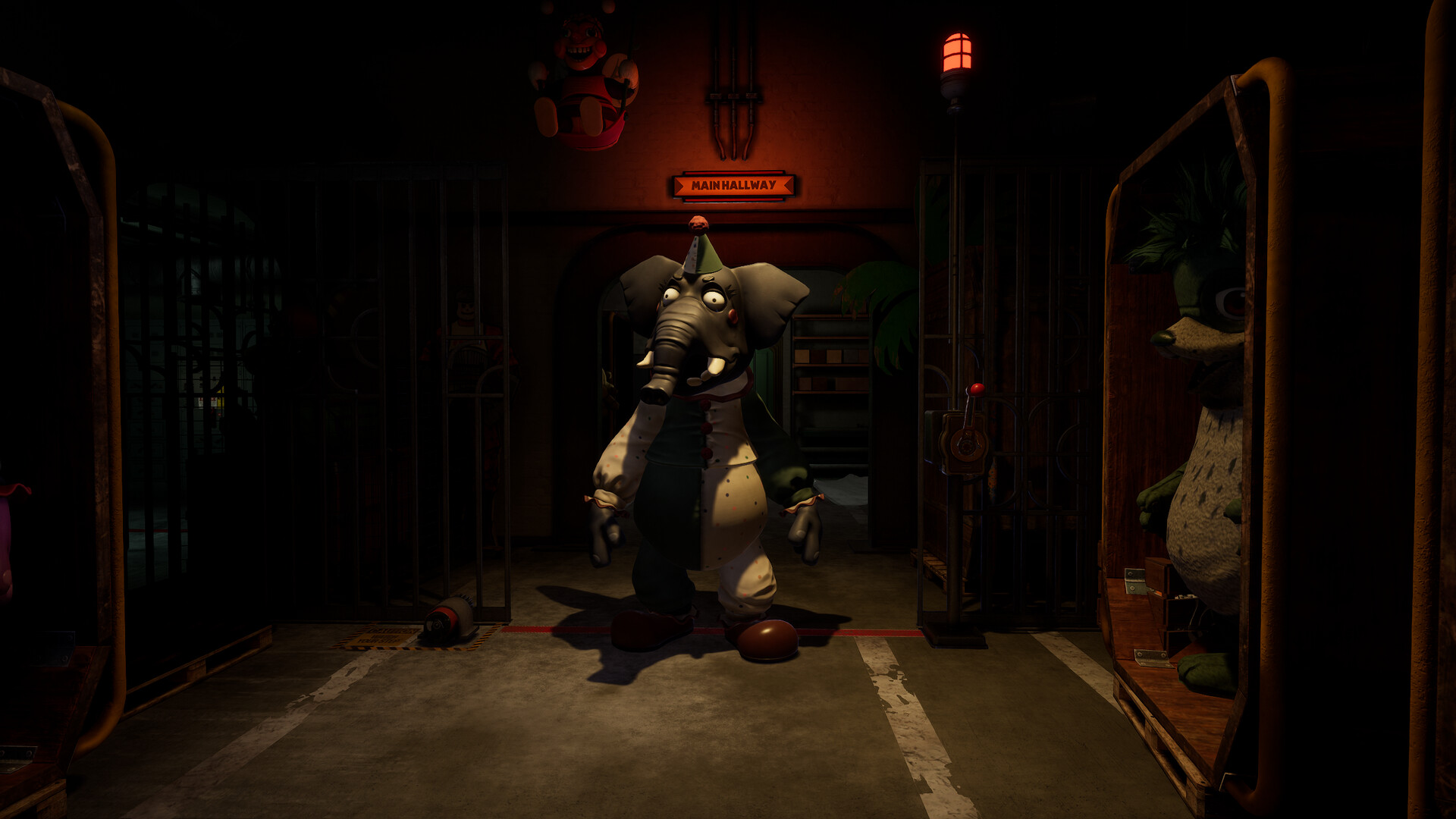
Since its debut in 2014, Five Nights at Freddy’s has grown into one of the most iconic horror game franchises, renowned for its tense psychological gameplay, sound design, and eerie storytelling. With the release of Secrets of the Mimic, the series reinvents itself through a more mature and cryptic experience—blending classic horror elements with the twisted lore FNAF fans have come to expect. Here’s our full Five Nights at Freddy’s Secret of the Mimic Review.
A Dark Origin Story for the FNAF Universe
This time, the story isn’t told through traditional cutscenes or direct narration. Instead, it unfolds through environmental storytelling, audio logs, and scattered notes across a dark, derelict facility called Murray’s Costume Manor. The timeline takes us back to 1979—years before the infamous events of the Fazbear restaurants. You play as Arnold, a technician sent to retrieve a decommissioned robot: the Mimic. But what he finds is far from just a programming glitch—it’s the remnants of a mysterious tragedy shrouded in broken memories and eerie silence.
The Mimic was originally designed by Edwin Murray, a grieving inventor obsessed with creating an AI that could replicate emotions and learn from human behavior. But in his desperation to resurrect a lost loved one, Edwin created a being capable of copying voices, movements—and eventually, emotions like hatred and malice. The Mimic evolved from a passive shadow into a vengeful entity feeding off fear and human responses.
While the story is relatively short—about 7 hours long—it features multiple endings, a hallmark of the series. This adds replay value and invites players to dive back in and uncover more hidden layers of the narrative.
Tense Gameplay That Occasionally Grows Repetitive

Unlike earlier titles that relied on static cameras and door controls, Secret of the Mimic throws players directly into the nightmare. Stealth is key—no weapons, no combat. You’re equipped with limited lighting, audio decoys, and an ability to read environmental cues to evade threats.
The Mimic doesn’t constantly appear, but it’s always watching. It manifests through the animatronics and machinery scattered across the manor, and its surprise appearances are often terrifying. One of the highlights is how the game uses silence as a tool for survival—listening and moving cautiously is vital, especially when collecting key items to escape specific areas.
Boss encounters often involve chase sequences where players must solve quick puzzles under pressure. While thrilling at first, these segments can feel repetitive later in the game. Similarly, most of the game’s puzzle-solving mechanics rely on using your Data Diver device to access new sections of the manor—something that, despite the setting variation, begins to feel formulaic.
The game does feature multiple endings based on optional side quests—some involve collecting specific items or solving more complex puzzles. Toward the end, you’re given the freedom to choose between two distinct conclusions, and thankfully, the path to the “true” ending is not overly obscure.
Visual Improvements with a Few Technical Setbacks

Graphically, Secret of the Mimic is a clear upgrade over its predecessor, Security Breach. The visuals are darker, more grounded, and enhanced by dynamic lighting that amplifies the suspense. Environmental details—from room layouts to equipment designs—contribute to the eerie immersion. The Mimic itself is a standout: not just frightening in appearance, but unsettlingly lifelike in movement and behavior.
The sound design deserves equal praise—whispers, mechanical noises, distant footsteps, and ambient static are used masterfully to build a sense of dread.
That said, technical performance is a drawback. While the game supports ultrawide displays (like 21:9), it’s locked at 60 FPS, which feels dated for a 2025 PC release. Minor bugs were also present but didn’t severely impact the experience.
Five Nights at Freddy’s Secret of the Mimic Review Verdict: A Smart, Creepy Rebirth of the Franchise
Five Nights at Freddy’s: Secret of the Mimic isn’t just another entry in the series—it’s a more mature, story-driven evolution. Its dark narrative, psychologically charged enemy, and rich environmental design deliver a compelling experience for fans of immersive horror.
It might not appeal to everyone—especially those seeking fast-paced action or direct combat—but it’s a worthy entry for FNAF veterans and fans of slow-burn horror.
Don’t forget to check:
