Following the success of High on Life a few years ago, it was only natural to expect Squanch Games to expand on the concept introduced in the original. From the beginning, the series was never a traditional shooter. Instead, it blended action, satire, and absurd sci-fi concepts into a chaotic but memorable experience.
With High on Life 2, the studio pushes that formula further, delivering a bolder and more varied experience while introducing new mechanics that noticeably reshape how the game plays.
A Sharper, More Daring Satirical Story
Once again, you step into the shoes of a silent, unnamed protagonist armed with a collection of talking alien weapons, each with its own personality and constant commentary. This time, however, you are no longer a bounty hunter chasing criminals across the galaxy. Instead, you find yourself on the run, targeting powerful figures tied to a massive intergalactic pharmaceutical corporation exploiting humans as a narcotic resource.
The narrative continues to rely heavily on satire, but this sequel leans more aggressively into criticism of corporate culture, billionaire influence, and political power structures. Some jokes feel sharper and more intelligent than in the first game—particularly those targeting blind corporate loyalty and media manipulation. However, the humor remains uneven at times. While certain gags land perfectly, others feel stretched too long or less impactful than intended.
Talking Guns and Evolved Combat

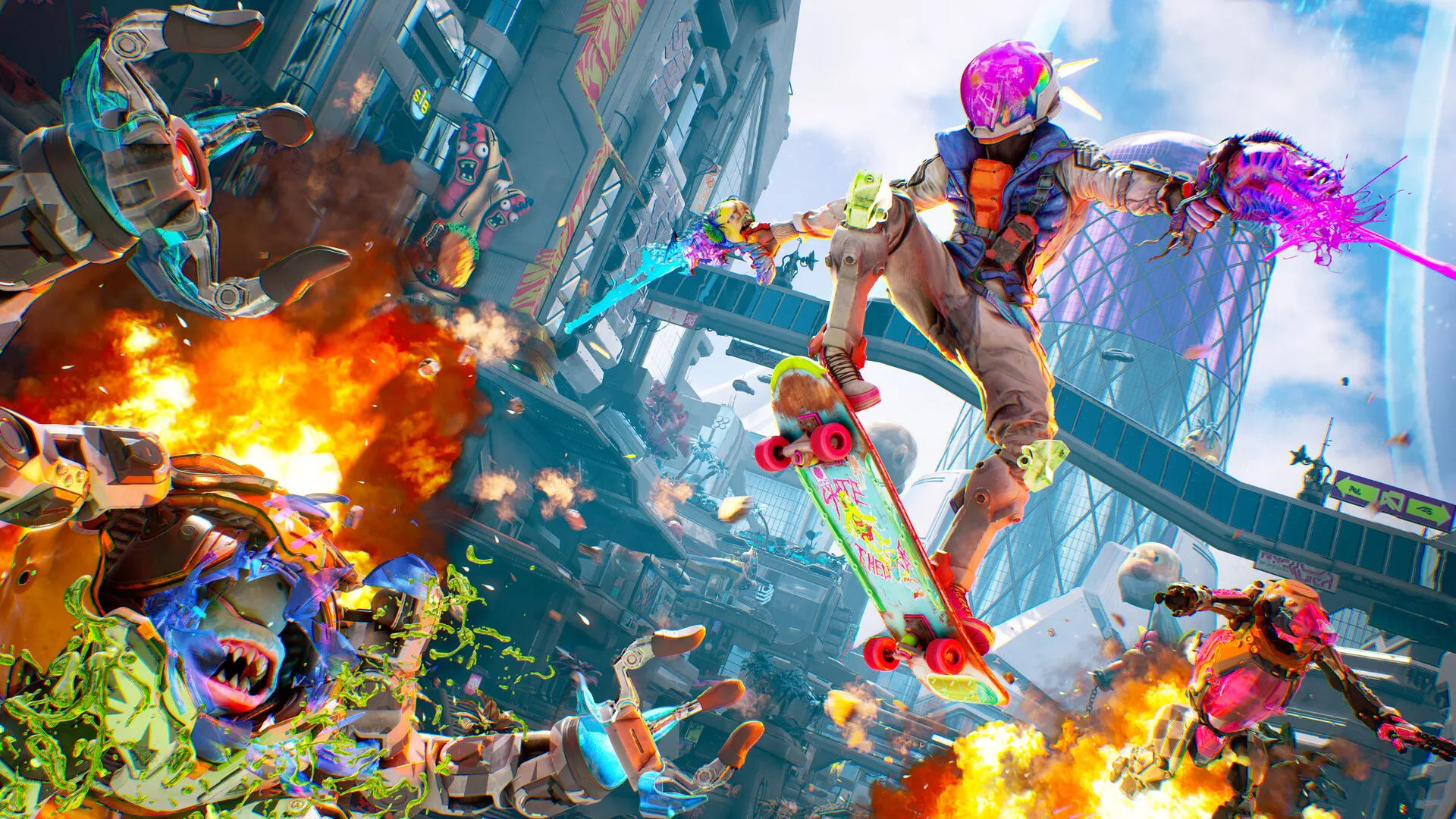
From the outset, it’s clear the game has no interest in being a standard FPS. One of its most surprising additions is the skateboard mechanic. On paper, it sounds simple, but in practice, it significantly changes the pacing of both traversal and combat. Grinding rails, jumping between platforms, and sliding through environments add energy to exploration and make movement feel dynamic and satisfying.
The series’ signature talking alien weapons return, each offering distinct abilities and playstyles. Some emphasize rapid-fire combat, while others provide utility functions like launching enemies into the air or using electrical energy to solve puzzles and traverse environments.
Combat variety is slightly improved compared to the original, especially thanks to weapon upgrades and expanded abilities. However, the system still shows weaknesses. Enemy AI lacks sophistication, and some encounters feel chaotic rather than carefully designed. Additionally, weapon impact feedback doesn’t always deliver the punch expected from modern shooters, occasionally reducing the intensity of firefights.
Strong Mission Variety and Side Activities

What truly distinguishes High on Life 2 is its constant effort to surprise players with fresh scenarios. Rather than relying on repetitive combat missions, the game frequently shifts tone and structure.
One mission might involve investigating a murder aboard a luxury spaceship, while another throws you into a bizarre assassin convention tournament. Later, you may return to Earth to confront a strange cult operating inside a spa resort. Not every idea succeeds equally, but the variety keeps the experience engaging.
The game also features multiple hub areas filled with optional activities and comedic side content. You can compete in skateboard races, work as a taxi driver, perform stand-up comedy routines, or even sit through a full-length in-game movie at a cinema. While none of these activities are mandatory, they give the world personality and make it feel more alive.
Technical Issues and Familiar Weaknesses

Despite its creativity, the game is not without flaws. Some players may encounter stability issues or crashes. On PlayStation 5, performance can fall short of expectations, with noticeable drops below 60 FPS and visual fidelity that feels weaker compared to other major releases this year.
The humor also remains inconsistent. While some scenes deliver sharp comedic timing, others overstay their welcome or recycle ideas from the first installment.
High on Life 2 Review Final Verdict
High on Life 2 offers a refreshing alternative to modern shooters that take themselves too seriously. It thrives on absurd ideas, fast traversal, and a world packed with strange comedic moments. The addition of the skateboard meaningfully enhances movement and combat flow, and the wide mission variety prevents the experience from feeling repetitive.
However, combat depth still leaves room for improvement, technical performance can disappoint, and the humor does not always hit its mark. Even so, it remains an entertaining and unconventional shooter—especially for players seeking something different from the typical FPS formula.
Don’t forget to check:
High on Life 2 Review
High on Life 2 offers a refreshing alternative to modern shooters that take themselves too seriously. It thrives on absurd ideas, fast traversal, and a world packed with strange comedic moments.
7.5
Pros
- Creative ideas and a distinct shooter experience
- Skateboard traversal adds enjoyable momentum
- Strong variety in missions and side activities
- Talking weapon personalities add charm
- A world full of strange and comedic details
Cons
- Combat lacks depth compared to top-tier shooters
- Enemy AI is sometimes limited
- Inconsistent humor with occasional overextended jokes
- Technical issues and performance instability
