
After a long wait, the creators of the acclaimed horror puzzle series Little Nightmares, Tarsier Studios, return with a new title that feels familiar yet more ambitious and creatively liberated. That game is REANIMAL.
After completing REANIMAL in full over the past two days, we bring you our complete Reanimal review to determine whether it is worth your time, especially if you are a fan of this genre.
A Mysterious Story on a Nightmarish Island

As we have come to expect from Tarsier Studios, the developers behind Little Nightmares I and II, and even from Little Nightmares III developed by Supermassive Games, the experience centers around a cryptic narrative set within a dark and unsettling world you must escape while uncovering its hidden truths.
REANIMAL follows a similar approach. The game drops you into its eerie world with minimal exposition. You begin controlling a character on a small boat in the open sea, rescuing another character, and from there the true journey begins.
The story revolves around two orphaned siblings, a brother and sister, who embark on a nightmare-filled journey to a mysterious island that was once beautiful but has since become a desolate and disturbing place. Their goal is to rescue their friends and escape the island.
While the premise appears simple, it hides layers of secrets, disturbing truths, and narrative details that unfold gradually throughout the journey. As with previous Tarsier games, the story is not delivered traditionally. Instead, it relies heavily on environmental storytelling. The notable addition this time is occasional dialogue between characters, yet the narrative remains intentionally ambiguous. The developers leave interpretation largely to the player, encouraging personal reflection and analysis.
The game is divided into three major regions. In each area, you must rescue one friend in order to proceed to the next. The full experience lasts approximately five to seven hours depending on your pace, similar to Little Nightmares II. Three DLC expansions have also been confirmed, which are expected to extend the total playtime after launch.
Overall, REANIMAL delivers a dark, mysterious story filled with symbolism and disturbing undertones. Fans of Little Nightmares will feel immediately at home, while newcomers may find the ambiguity either intriguing or challenging.
Gameplay Built Entirely Around Cooperation

Unlike the previous two titles from Tarsier, which focused primarily on solo play with occasional NPC assistance, REANIMAL is designed from the ground up as a fully cooperative experience.
The core gameplay loop includes platforming, puzzle-solving, light combat, stealth, and chase sequences. However, everything is structured around two-player cooperation from start to finish.
Gameplay is divided into two primary segments. The first takes place aboard the boat at sea, usually at the beginning of the game and during transitions between large areas. These sections include maritime traps, environmental hazards, and simple puzzles often solved using a lantern in coordination with your partner.
The second and more substantial portion occurs on land. Here, cooperation becomes essential. Every puzzle and obstacle is designed with teamwork in mind. Players frequently alternate roles, with one character waiting while the other solves part of a puzzle. Combat appears more frequently than in previous entries, though it remains relatively simple compared to other gameplay elements.
REANIMAL emphasizes stealth, monster evasion, and tense chase sequences, as expected. While there are moments of light melee combat using close-range weapons such as knives, the foundation of the experience remains tension, fear, and hiding from grotesque enemies.
Despite the strong cooperative design, one noticeable weakness is the lack of distinction between the two siblings. Both characters share identical abilities, meaning neither possesses a unique skill set that significantly differentiates gameplay roles. Although this does not break the experience, it slightly limits depth.
Puzzles, unfortunately, are among the weaker elements. Many are straightforward and require minimal mental effort. Solutions often involve simply locating a nearby object or exploring adjacent rooms. While this simplicity slightly diminishes the experience, it does not fundamentally harm it.
Exploration exists but is relatively light. Secret areas reward players with cosmetic items such as hats and collectible objects tied to trophies, rather than meaningful gameplay upgrades.
Artistic Direction and Sound Design at a High Level

REANIMAL was developed using Unreal Engine 5, allowing for impressive visual fidelity. Lighting and reflections are strong, but what truly stands out is the psychological atmosphere rather than pure graphical power.
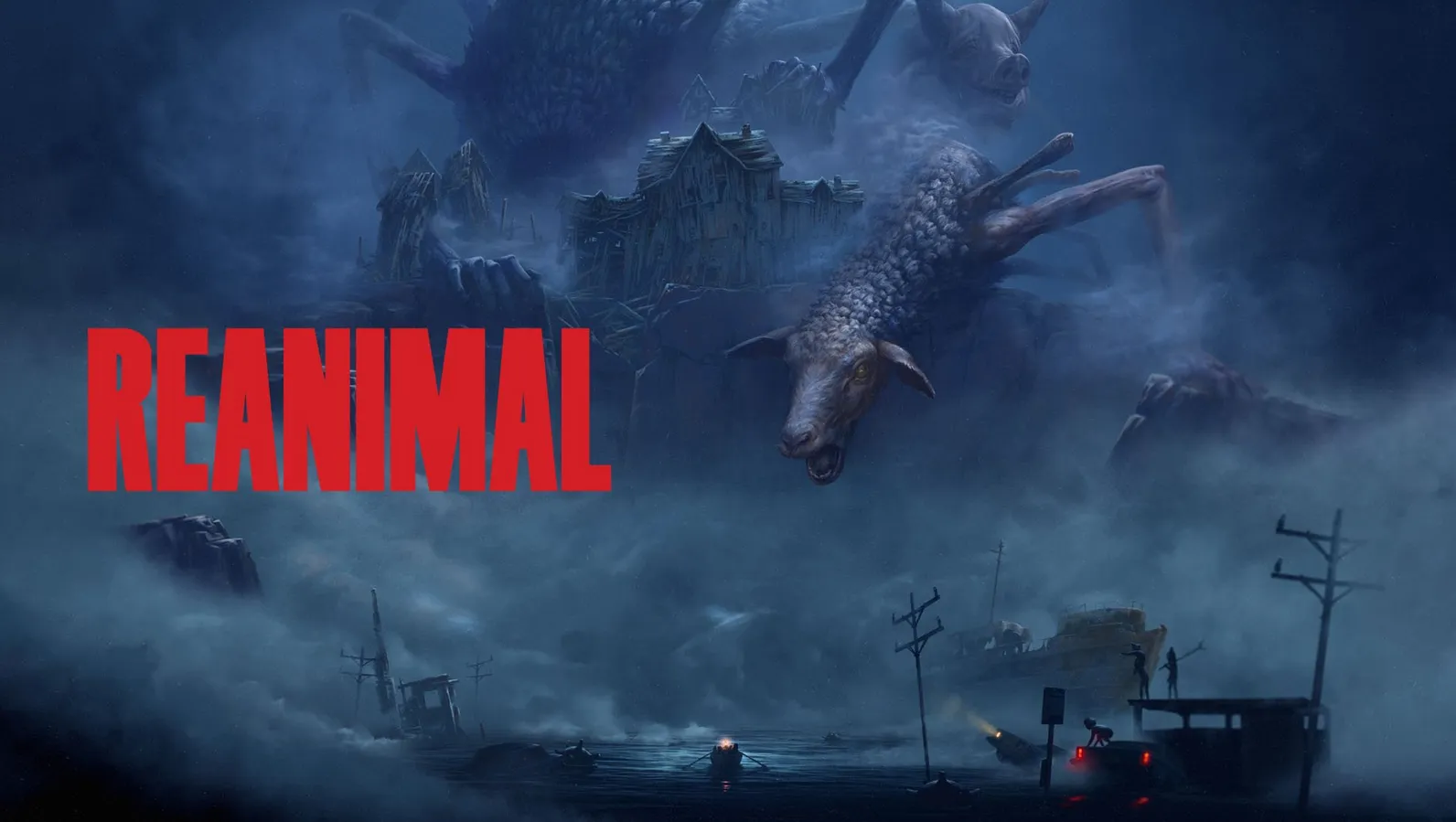
The game relies heavily on darkness, fog, subtle lighting manipulation, and oppressive environmental design rather than cheap jump scares. The environments are diverse, detailed, and filled with small but impactful visual storytelling elements.
Enemy design deserves special praise. Creatures appear as twisted, humanoid animals, aligning perfectly with the game’s title. Their distorted forms evoke discomfort and tension even before direct confrontation. Simply hearing their footsteps can be unsettling, and being chased intensifies the fear significantly.
Sound design remains one of the strongest components. Although the musical score is less prominent compared to previous works from the studio, environmental audio plays a critical role. Every sound, from footsteps on different surfaces to wind, rain, rustling grass, and enemy movement, is carefully crafted. Musical tones dynamically shift depending on the situation, enhancing immersion and tension.
Technical Performance
On PlayStation 5, REANIMAL offers two graphical modes. Performance mode runs at 60 frames per second with reduced visual fidelity, while Quality mode runs at 30 frames per second with enhanced visuals.
Both modes maintain stable performance overall. The primary issues encountered were minor technical bugs requiring occasional restarts, along with connection problems and unexpected disconnections during online cooperative sessions. These issues appear fixable through post-launch updates and do not significantly impact the overall experience.
Reanimal Review Final Verdict

Tarsier Studios brings its full experience from Little Nightmares I and II into REANIMAL, delivering a haunting cooperative adventure built around tension, environmental storytelling, and grotesque creature design.
The result is a disturbing and memorable horror experience that fans of the genre should not miss.
Don’t forget to check:
Reanimal Review
A distinctive nightmare experience for fans of Little Nightmares and atmospheric horror games.
4.5
Pros
- A darker and more intense story than the developer’s previous works
- Rich narrative filled with symbolism, secrets, and interpretative freedom
- Strong environmental storytelling
- Psychologically unsettling atmosphere
- Outstanding enemy and boss design
- Impressive artistic direction and sound design
- Levels designed fundamentally around cooperation
- Full co-op support both locally and online, including Friend Pass functionality
Cons
- Limited gameplay distinction between the two siblings
- Puzzles are relatively easy and straightforward
- Online connection issues and occasional disconnections during co-op
