
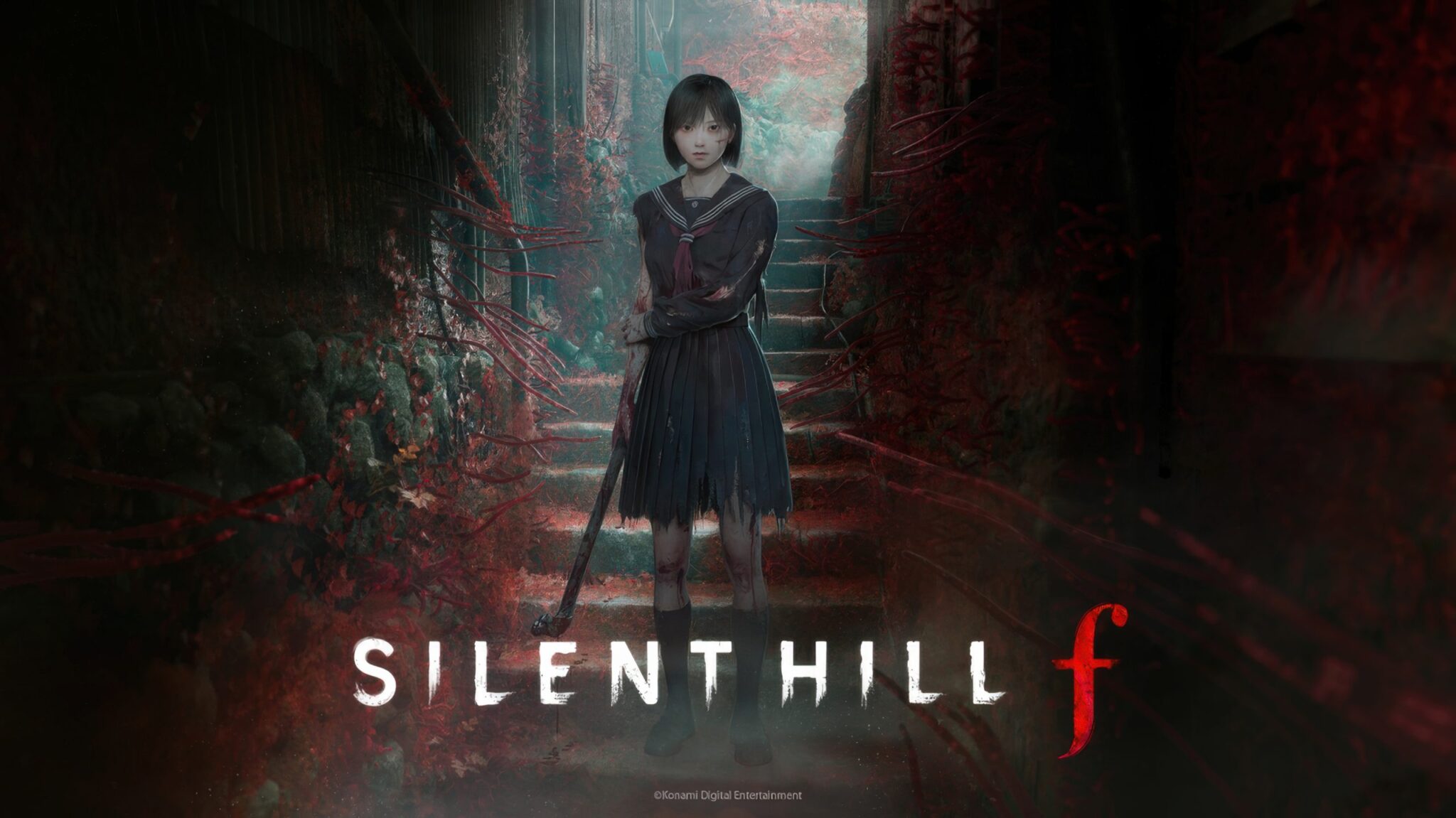
After more than 13 years away from the spotlight, the Silent Hill series makes a comeback with an all-new entry titled Silent Hill f. This time, the game shifts in a bold new direction, taking players to 1960s Japan in a setting that blends beauty with dread. Developed by NeoBards Entertainment, written by renowned Japanese author Ryukishi07, and featuring music from legendary composer Akira Yamaoka, Silent Hill f aims to redefine psychological horror for a new generation. Here’s our full Silent Hill f Review.
A Story That Blends Horror and Social Commentary

From the opening moments, it’s clear that Silent Hill f is more than just a traditional horror game. The narrative intertwines fear with deep social themes, something Ryukishi07 is well-known for. By the time all the threads come together near the end, the result is a thought-provoking journey packed with symbolism and haunting commentary.
The story follows Hinako, a teenage girl living in the rural village of Ebisugaoka. After a dispute with her father, she goes out to meet friends—only to watch her peaceful surroundings collapse into nightmare as a thick fog engulfs the village.
What follows is a psychological descent where external monsters mirror inner battles, pushing Hinako to question the line between reality and illusion.
What stands out most is how the game uses horror imagery to reflect human struggles and societal issues. While the main playthrough lasts 10–12 hours, the inclusion of five different endings adds replay value and makes you want to return to uncover every hidden meaning.
Gameplay Needed More Variety

Silent Hill f uses third-person action focused heavily on melee combat rather than firearms. Players manage multiple bars simultaneously: health, stamina, mental stability, and weapon durability. Weapons break over time, forcing you to repair or replace them, while collectible Charms grant special abilities to aid progression.
While the combat system is functional, it quickly becomes repetitive. Enemy variety is limited to just a handful of types, which are recycled throughout the game. Puzzles, on the other hand, are a highlight—challenging and thought-provoking, sometimes taking up to an hour to solve.
The biggest disappointment is the lack of exploration. Unlike Silent Hill 2 Remake, which encouraged discovery and side content, Silent Hill f is almost entirely linear, with a strong cinematic focus.
For a village setting rich in potential secrets, this was a missed opportunity. The branching endings partially compensate, but the lack of environmental freedom undermines the series’ classic identity.
Visuals That Mix Horror and Beauty

One of the biggest shifts is the move from small-town America to rural Japan in the 1960s, and it gives the game a distinct artistic tone.
The visuals are stunning, balancing serene natural beauty with grotesque horror. The fog transforms scenic landscapes into grotesque nightmares, while the “floral plague” motif fills the world with disturbing imagery. Monster design is a standout, blending psychological and body horror in new and imaginative ways.
On PC, performance was excellent. Tested with a Ryzen 7 9800X3D, 32GB DDR5 RAM, and AMD RX 9070 GPU at UltraWide 3440×1440 with Lumen enabled, the game consistently delivered 60 FPS with no bugs or crashes. It’s one of the best showcases yet for Unreal Engine 5.
An Iconic Soundtrack by Akira Yamaoka

No Silent Hill entry is complete without Akira Yamaoka, and once again he delivers a masterclass. His score balances eerie dread during chase sequences with melancholy tones during emotional moments, perfectly capturing Hinako’s turmoil.
Voice acting in Japanese further enhances immersion, with excellent performances across the board.
Silent Hill f Review Final Verdict

Silent Hill f reimagines the series with a bold new setting and a deep, symbolic story that mixes social issues with psychological terror. Backed by Akira Yamaoka’s haunting soundtrack, beautiful yet terrifying visuals, and multiple endings, it offers a compelling narrative-driven experience.
However, repetitive combat, limited enemy variety, strict linearity, and the absence of Arabic support hold it back from being a masterpiece. Still, for fans of the series and those who enjoy story-driven psychological horror, it’s a memorable and worthwhile return.
Don’t forget to check:
