
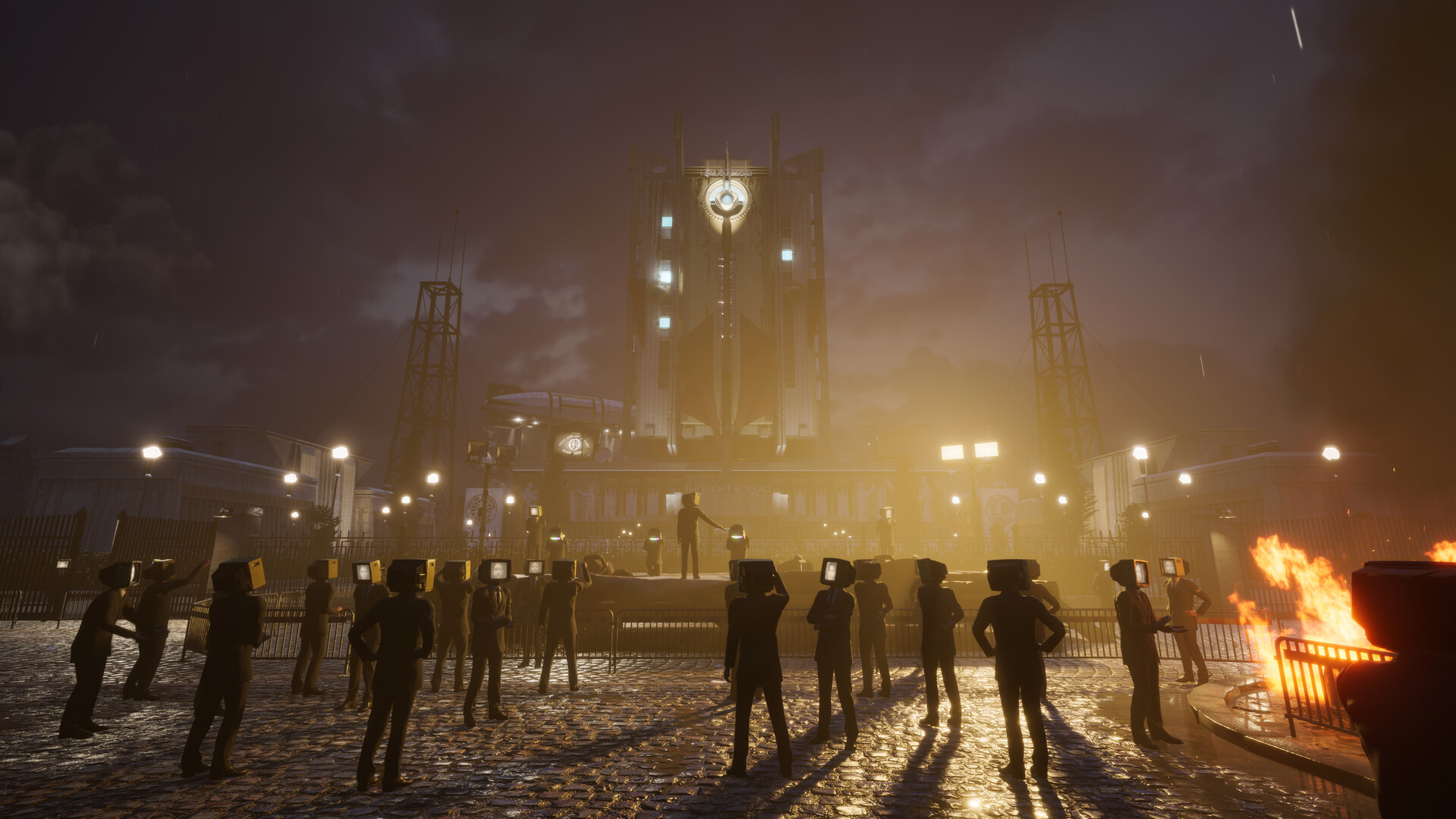
In a bleak dystopia ruled by surveillance and mind control, KARMA: The Dark World delivers a psychological journey blending philosophical horror with haunting visual storytelling. Set in East Germany, 1984, the game plunges players into a fragmented world where reality is distorted by authoritarian control. This isn’t your typical horror game—it’s a thought-provoking descent into the subconscious. But is it for everyone? Let’s find out in our KARMA: The Dark World Review.
A Dystopian Tale That Raises Deep Questions
You play as Daniel McGovern, an investigator working for the Leviathan’s Thought Analysis Department. Tasked with recovering a missing device, Daniel finds himself entangled in a deeper conspiracy involving betrayal, manipulation, and lost memories.
The narrative is non-linear and unfolds through mind-diving technology that lets Daniel relive other characters’ memories. This fragmented storytelling creates an intentional sense of disorientation—like walking through a living nightmare. It explores themes of identity, loyalty, freedom, and truth through heavy symbolism. While intellectually engaging, the narrative may feel overwhelming or vague, especially near the abrupt and mysterious ending.
Despite being enjoyable, the experience is short-lived. Wrapping up in roughly 6 hours, the story feels like it ends too soon. One gets the impression that a sequel might be on the way to explore this intriguing world more deeply.
Gameplay That Feels More Like a Novel

KARMA leans heavily on visual exploration and interactive storytelling. Players wander through surreal environments, read scattered documents, listen to dialogues, and solve basic puzzles. There’s no combat or high-action sequences—this game focuses on atmosphere and message.
Some puzzles require use of a special camera to reveal hidden elements or activate machinery. These moments demand observation and logic, but they’re not particularly challenging. This style suits narrative-driven gamers but might feel too passive for those seeking action or fast-paced gameplay.
Although marketed as horror, the game leans more into tension than fear. Even chases with “scary” enemies lack intensity, often feeling more annoying than terrifying.
Artistic Visuals and Immersive Sound Design

The standout feature of KARMA: The Dark World is its visuals. Powered by Unreal Engine 5, the game doesn’t aim for realism alone. It combines detailed, grounded environments with surreal, abstract scenes that mirror the mental states of its characters.
Color plays a key role—dim and muted palettes dominate, enhanced by smart lighting and shadows to evoke anxiety and claustrophobia. Transitions between environments are sudden and jarring, mirroring a disturbed psyche. From sterile offices to twisted dreamscapes, the aesthetic captures the game’s internal turmoil brilliantly.
The sound design is equally commendable. Ambient tracks adjust to the scene’s emotional weight. Voice acting is top-notch and reinforces the story’s depth. Background noises—flickering electronics, distant footsteps, hushed whispers—create a lingering unease. Together, these audio-visual elements deeply immerse the player.
On PlayStation 5, the game runs smoothly without crashes or frame drops. However, the camera movement occasionally feels clunky, particularly during chase sequences.
KARMA: The Dark World Review Final Verdict: A Deep, Symbolic Journey
KARMA: The Dark World is not your average horror game. It’s a cerebral, symbolic experience best suited for players who value introspection and philosophical storytelling over thrills and action.
If you enjoy interpreting layered narratives, soaking in atmospheric visuals, and pondering existential questions, this game will leave a lasting impression. But if you’re after a thrilling, action-packed horror ride, you might find it slow or even frustrating.
Don’t forget to check: