I went into Rematch with modest expectations, but after my first ten matches, I kept repeating the same thought: this isn’t a traditional football game—it’s a competitive experience built on rhythm, quick decision-making, and fast reflexes. That’s exactly what I’ll be breaking down in today’s Rematch review.
On the surface, the concept is simple—no referee mistakes, no offside rule—but beneath that lies a layer of tactical choices and precise mechanics that reward discipline and strong team communication. There were moments of pure excitement when a flowing sequence of one-touch passes ended in a goal, and there were also times I felt intense frustration when a teammate held onto the ball too long, or when a slight connection delay ruined a promising attack.
Rematch’s Unique Gameplay

The heart of the experience lies in the fact that each player controls only one character from their team—this changes the rules entirely. I was no longer building attacks by myself, as in traditional football games, but becoming part of a collective system that only works when its members are in sync.
Passing and shooting depend on body direction, camera angle, and button press strength. There’s no generous aiming assist, which can feel tricky at first but becomes a source of creativity once you adapt. Dribbling focuses on quick, short moves rather than flashy skill chains, and tackling requires perfect timing to avoid leaving dangerous gaps for the opponent.
Matches run at a blistering pace, with almost no stoppages, making counterattacks far more dangerous than long-range shots. The best teams I faced mastered switching the ball down the wings before quickly reversing play into open space.
Even goalkeeping isn’t the sole job of one player—roles often shift naturally depending on ball position, forcing teams to communicate clearly about defensive coverage and pressing.
Teamwork at the Core

Cooperative play is the soul of Rematch, but also its most inconsistent element. At peak hours, matchmaking was quick, but skill balance between teams could be hit or miss. In some matches I faced cohesive squads with clear strategies, while my own team was a random mix of uncoordinated players.
Playing with friends over voice chat made a huge difference—we transformed from scattered individuals into a united front capable of executing effective plays.
In-game communication tools are basic—they’re fine for requesting passes or calling for the ball but lack the depth to issue detailed offensive or defensive instructions. I would have liked a more advanced command wheel for quick tactical calls.
Stability was generally solid, but occasional sync delays caused the ball or a player to suddenly jump positions. While not game-breaking, it was frustrating when it happened in critical moments.
The learning curve is steep. Even after five hours, I was still making mistakes in passing angles and body positioning, but over time my field awareness and decision speed improved. The game rewards patience and persistence, with a high enough skill ceiling to keep dedicated players engaged.
Customization offers fun cosmetic options, but the number of menus and screens before matches can feel excessive—especially in a competitive game that should drop you into the action quickly. On the bright side, balance is fair: no overpowered classes, and performance always comes down to positioning and vision. That said, mid-range shot power could use some tweaking.
Creative and Distinct Visual Design

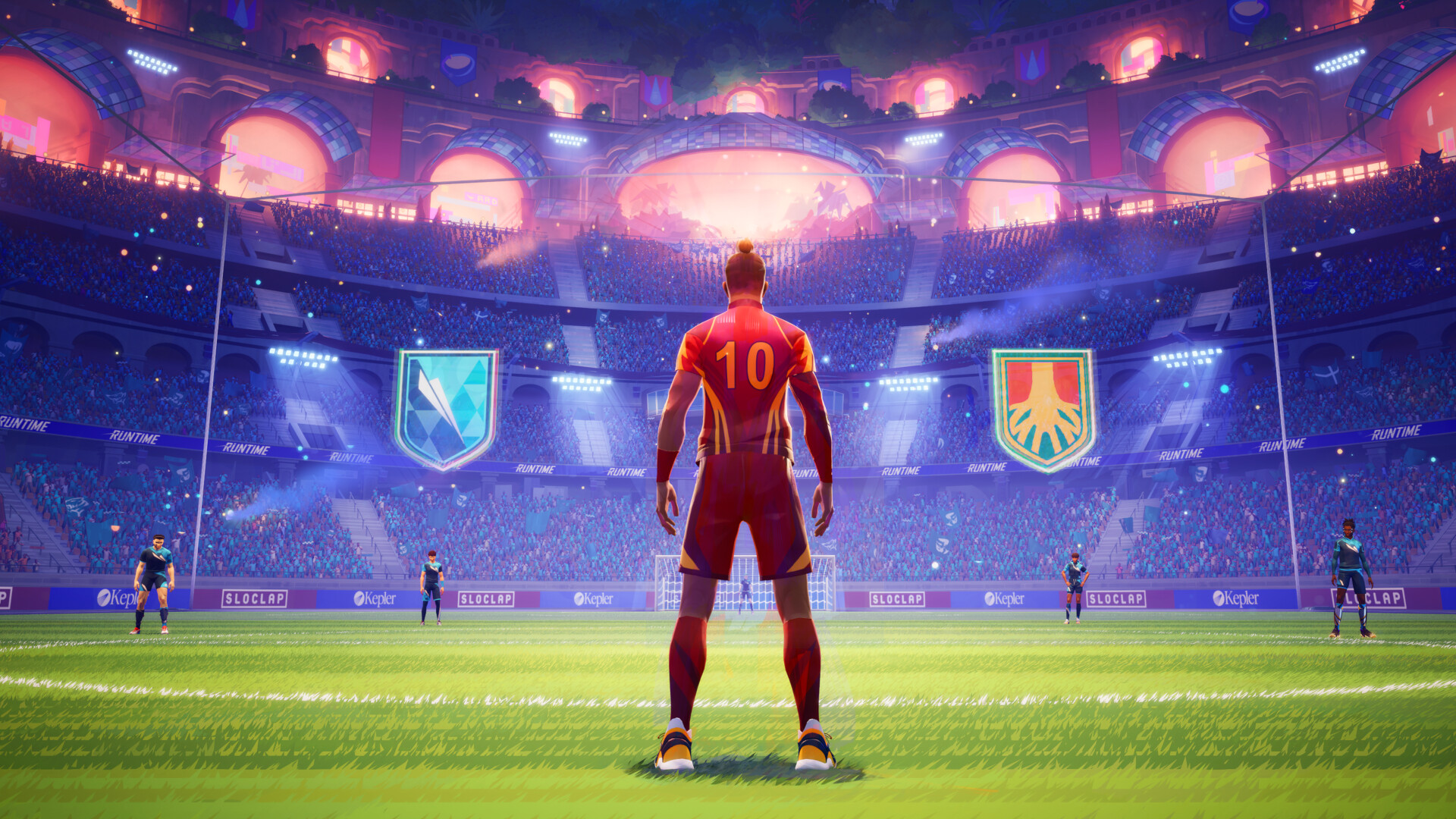
The stadiums offer visual variety, with slight differences in size and spatial feel. I especially liked the arenas with calm backgrounds that made tracking the ball easier.
In stadiums with intense lighting or heavy effects, I sometimes lost sight of the ball—especially at tilted camera angles. Visual effects during shots or tackles are great, but can become overwhelming in chaotic moments, prompting me to enable the “reduced effects” option for clarity.
Artistically, the visuals strike a clean balance between cartoony and modern. Characters are designed with clear silhouettes, making them instantly recognizable. The colors are vibrant and match the game’s energy, while animations are convincing most of the time—though some movements, like quick direction changes or shoulder tackles, could use more fluidity.
As for audio, ball and collision sounds are satisfying, and the menu music is upbeat, though I wished each stadium had its own distinctive sound identity.
Rematch Review Final Verdict

In the end, Rematch succeeds in delivering a different kind of arcade football experience—fast, tactical, and team-focused—rewarding players who have the patience to learn and master its mechanics.
It makes you feel truly involved in a team, where every pass or defensive intervention matters. At the same time, it can be unforgiving for solo players or those expecting instant smoothness.
If the developers commit to ongoing support, fix network hiccups, and expand communication tools, Rematch has all the ingredients to become one of the standout competitive sports games of the coming years.
For now, it’s a fun choice for anyone seeking something fresh and different—provided they’re ready for the challenge.
Don’t forget to check: