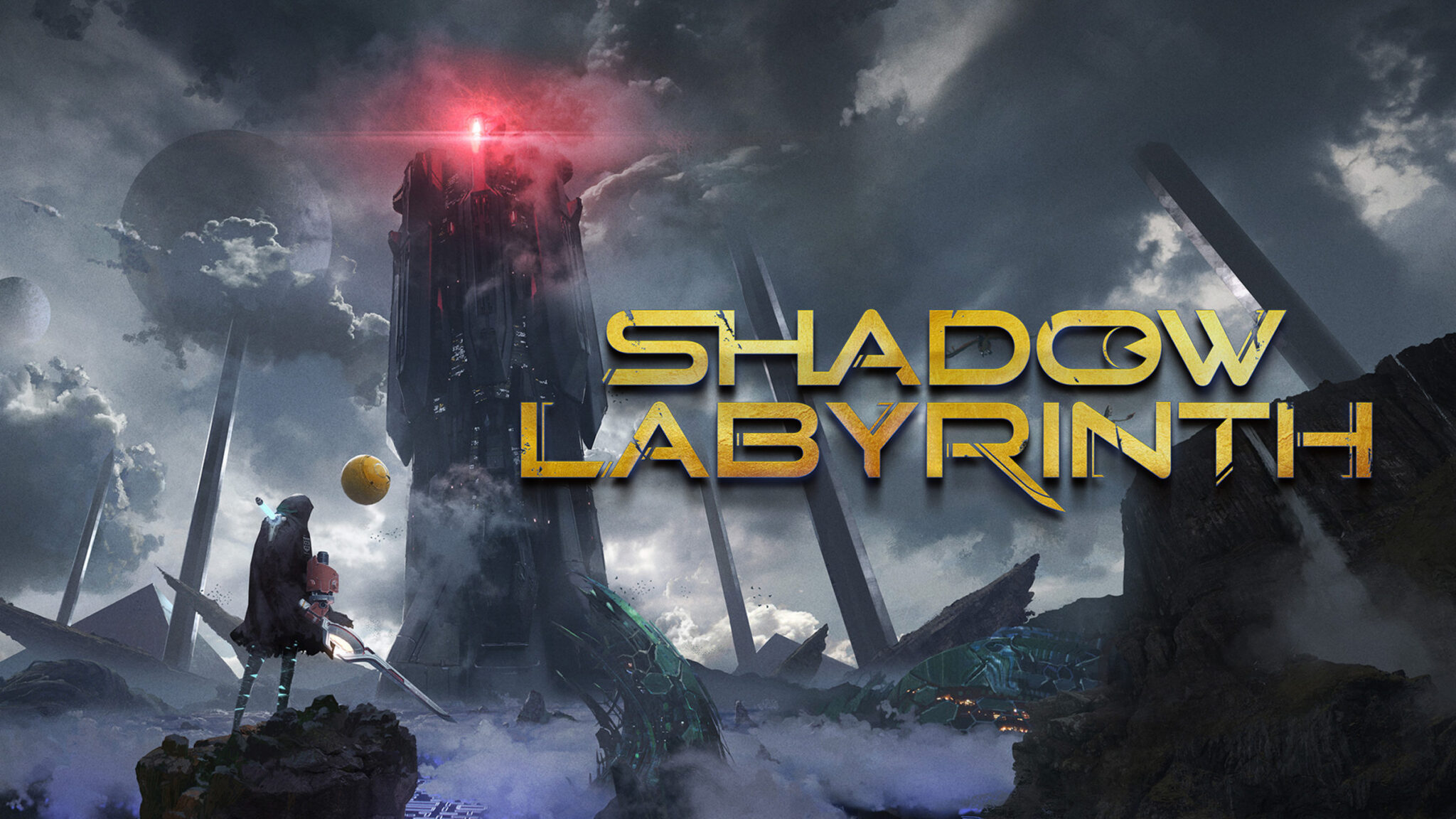
When Shadow Labyrinth was first announced, I was immediately intrigued. How could the peaceful, family-friendly PAC-MAN—one of gaming’s earliest icons—be reimagined in a dark, 2D Metroidvania-style side-scroller? After playing through it, the result is… strange, mysterious, and surprisingly bold. Here’s our full Shadow Labyrinth review.
Story (No Spoilers)
You play as Swordsman No. 8, a mysterious hero who awakens on a war-torn, abandoned planet. Accompanied by a strange creature named Puck, you gain evolving powers that allow you to consume enemies and slowly transform into a formidable being called GAIA.
The story explores themes of identity and transformation, offering a darker perspective on the PAC-MAN universe, one we’ve never seen before. It connects narratively with the “Circle” episode of the Secret Level series, which lays the foundation for the game’s lore. As the journey unfolds, things quickly spiral into darker territory, ending in a finale that’s both satisfying and… weird.
The narrative is delivered through silent interactions and on-screen text, a familiar approach in indie Metroidvanias. Surprisingly, this style complements the game’s bleak, atmospheric world. The lack of voice acting only adds to the mystique, reinforcing the desolate tone and emotional weight of the story.
Gameplay

Shadow Labyrinth plays much like Celeste and Castlevania, with a strong focus on movement, platforming, and maze-like level design. The complexity of the environments ramps up gradually, reaching challenging heights in the final chapters. However, many of the key movement and combat abilities aren’t unlocked until hours into the game, making the first 3 hours feel slow and underwhelming.
Once unlocked, these abilities transform the experience—movement becomes fluid and combat satisfying. You’ll explore in classic 2D side-scrolling fashion, moving left, right, up, and down through sprawling environments filled with enemies. Early on, you’ll face diverse enemy types: flying, crawling, or wall-climbing foes, while you’re armed with a sword, an iron glove, and dodge-and-jump mechanics.
The game includes typical powers like double jump and more advanced ones like grapple hooks. These upgrades make traversal and combat feel significantly better. In some sections, you even control PAC-MAN himself—here reimagined as Puck—who helps navigate glowing walls, offering a nostalgic nod to the franchise’s arcade roots.
Eventually, you unlock the ability to transform into the massive, mech-like GAIA, used both for combat and traversal. These moments are some of the game’s highlights.
Unfortunately, boss fights are the weakest part of the experience. While enemy patterns change, your own combat approach remains limited due to constrained environments and a relatively small moveset—even with upgrades. Regular enemy encounters also grow repetitive, and some later levels feel padded.
Visuals & Audio

The visuals and sound design are serviceable but not standout. Audio cues often blend into the background, and some environmental and enemy sounds repeat frequently. The absence of voice acting is expected for a game of this scale.
Visually, the game leans into a dark, oppressive art style, which fits the theme but suffers from repetitive environmental design. Despite functional layout variety, the color palette and assets begin to feel overly familiar.
Shadow Labyrinth Review Final Verdict

Shadow Labyrinth is an atmospheric, conceptually rich Metroidvania with strong environmental design and a refreshingly strange narrative. However, it struggles in areas that matter most—boss battles, movement diversity, and combat depth.
Don’t forget to check: