
The classic racing franchise Screamer has returned — but not in the way longtime fans might remember. In fact, it returns in a dramatically different form. With a bold reboot aiming to bring the series back into the spotlight, Screamer (2026) attempts to modernize the brand — though perhaps not in the most effective way.
In this Screamer review, we break down how the new entry tries to revive interest in the franchise — and where it succeeds or falls short.
One of the Longest Stories in a Racing Game
Rarely do you expect story to take center stage in a racing title. Yet the new Screamer heavily prioritizes narrative.
Rather than offering a straightforward arcade racing experience, the game dedicates an entire mode to its story campaign. Completing it is required to unlock the full roster of playable characters. The voice acting across the cast is excellent, with convincing accents and personality-driven performances.
The story follows multiple teams entering a high-stakes racing tournament promising massive financial rewards. As the competition unfolds, characters begin uncovering strange secrets — including a mysterious invention called Echo, which allows racers who die during competition to return to life as if nothing happened.
The narrative is presented through anime-style cutscenes, static illustrated dialogue sequences, and strong vocal performances. Each character receives gradual backstory development, revealing motivations and emotional conflicts over time.
However, the biggest issue is pacing. The campaign is excessively long — and unfortunately, it doesn’t justify that length. Most missions boil down to repeating the same objectives: win the race, finish in the top three, or simply complete it regardless of placement.
Occasionally, mission variants ask you to activate your car’s special ability or attack opponents, but this represents the peak of gameplay variety within the campaign.

You might ask: what more can a racing game offer? The answer isn’t complicated. Even within the racing genre, there are far more creative ways to structure narrative missions. Instead, the story mode leans heavily on repetition — and even side missions fail to add meaningful depth unless you are deeply invested in following the plot.
The story itself has moments of intrigue and a passable ending that explains the tournament’s secrets. Yet it lacks a truly impactful climax. Dialogue often feels padded, and certain characters — particularly Ritsuko — repeatedly cycle through the same emotional beats without meaningful development. This is in addition to some lazy agendas here and there.
There are also noticeable narrative inconsistencies. Characters speak different languages yet fully understand each other. While the game briefly addresses this early on, the explanation is too light to justify its constant presence throughout the campaign. Environmental naming conventions, such as referring to forests by numerical designations instead of actual names, further weaken immersion.
In short: if you enjoy slow-burn anime-style storytelling inside a racing framework, you may appreciate the effort. But the campaign overstays its welcome.
A Refreshing Gameplay Concept — But Not Perfect

The first thing you’ll notice is that this new Screamer plays nothing like modern staples such as Need for Speed or Forza. It adopts a distinct arcade philosophy built around simplified handling, aggressive speed bursts, and reduced punishment for mistakes.
Importantly, this reboot is radically different from classic Screamer entries.
The game emphasizes character abilities over vehicle specifications. Each racer has a unique skill set that directly impacts competition. Victory often depends less on raw driving precision and more on ability management.
For example, charging and activating boost abilities at the right moment is critical. Offensive abilities can be used both to attack rivals and gain positional advantages. Racing strategy revolves around timing, resource management, and character skill optimization.
The control scheme is unconventional. On PlayStation, the right stick triggers immediate drift maneuvers, while the left stick handles standard steering. Mastering this combination is essential for navigating sharp turns efficiently.
When vehicles are destroyed, they respawn due to the story’s Echo mechanic. However, the seconds lost during respawn can decisively impact your final ranking.
Track variety is visually strong, particularly forest and space-themed circuits. However, due to story mode repetition, you’ll revisit many tracks frequently. Outside of campaign, additional modes allow online multiplayer and local split-screen play, which adds value.
Gameplay Issues

While experimentation deserves praise, execution is uneven.
Car handling feels overly loose — almost as if controlling a rolling object rather than a weighted vehicle. Collision physics are overly simplified, with minimal visual damage feedback.
Speed sensation is another weak point. Because the game relies heavily on boost activations and abilities for acceleration, the raw engine power of cars feels underwhelming. Vehicles sometimes feel like platforms for triggering skills rather than machines with identity.
Customization options are limited. Since focus lies on characters rather than vehicles, performance upgrades are absent, and cosmetic customization is basic.
Track design, though varied visually, often feels mechanically repetitive, lacking distinct strategic challenges.
One critic described the game as a blend of racing, anime storytelling, and fighting mechanics — an accurate summary. Unfortunately, the fusion never fully realizes its potential.
Visual and Audio Design

Visually, track environments are the game’s strongest asset. Forest circuits are particularly impressive. The contrast between anime-style characters and realistic racing environments creates an interesting aesthetic balance.
Character design, however, feels inconsistent and occasionally chaotic. Vehicle designs struggle between futuristic ambition and distinctiveness, resulting in cars that often look generic or unattractive.
Sound design fulfills its purpose but lacks realism or standout quality. Engine sounds do not aim for simulation authenticity — consistent with the game’s arcade direction.
Performance on PlayStation 5 is stable, with no major technical issues encountered. The file size is relatively small compared to modern titles — a surprising positive.
Screamer Review Final Verdict
The new Screamer is undeniably bold. It attempts to reinvent racing by merging arcade mechanics, character abilities, and anime storytelling within a realistic track framework.
While the concept is refreshing, execution flaws in story pacing, handling mechanics, and track design prevent it from reaching its full potential.
Don’t forget to check:
Screamer Review
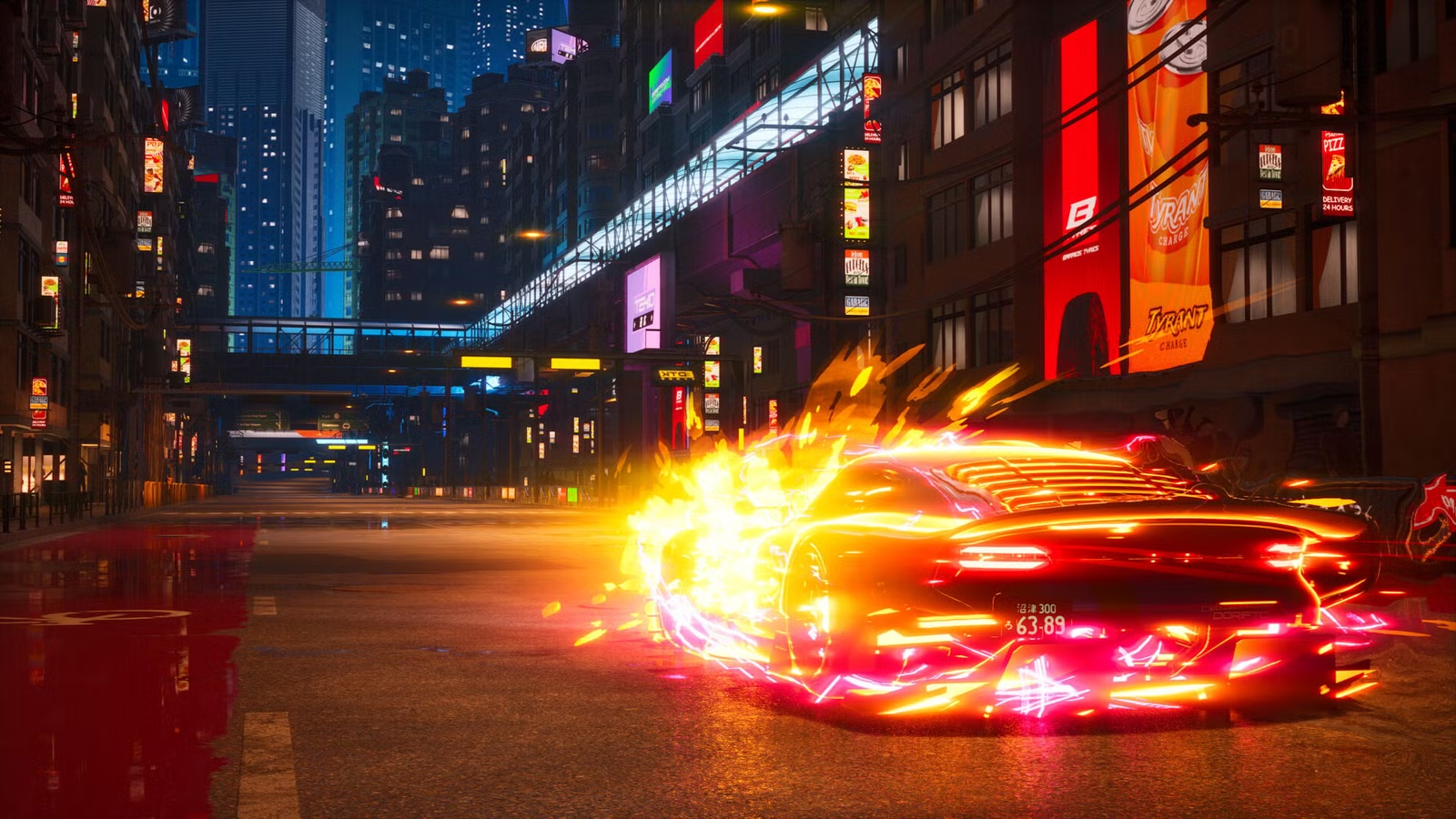
The new Screamer is undeniably bold. It attempts to reinvent racing by merging arcade mechanics, character abilities, and anime storytelling within a realistic track framework. While the concept is refreshing, execution flaws in story pacing, handling mechanics, and track design prevent it from reaching its full potential.
6.5
Pros
- Excellent voice acting
- Fresh arcade gameplay concept
- Visually varied track design
- Multiple modes including online and offline multiplayer
- Stable technical performance
Cons
- Overlong and repetitive story mode
- Narrative inconsistencies
- Unpolished driving feel
- Weak collision feedback
- Repetitive track challenges
- Inconsistent character design
- Underwhelming car visuals
- Average sound effects
- No Arabic language support